Forge BI
AI / Fintech
Outcomes
Plaid bank sync, AI chat, and auto-tracked goals all share one Prisma data model. No reporting DB, no ETL.
Tables named in analyst language (variance, runway, burn) so the AI reasons in the user's vocabulary, not generic BI.
Overview
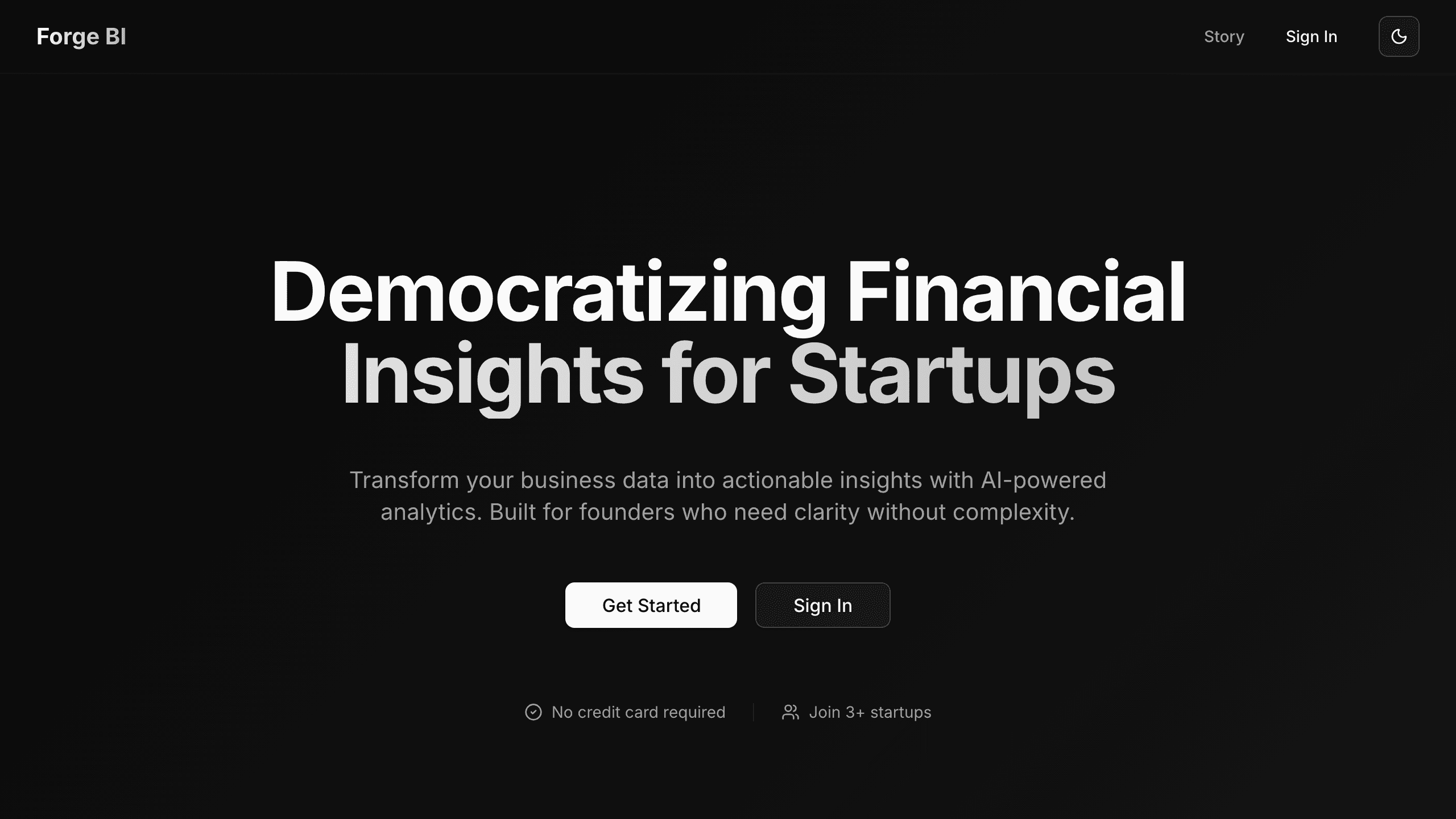
Forge BI is an AI-powered business intelligence platform designed specifically for startups. It connects to your financial data sources (bank accounts, accounting software) and uses natural language AI to deliver actionable insights.
Built with Next.js 15, TypeScript, and Vercel AI SDK. Integrates Plaid for bank data and applies 8 years of financial analysis experience to product design, creating dashboards that translate raw data into decisions.
Challenge
Startups need financial visibility but can't afford dedicated analysts. Existing BI tools are complex, expensive, and require SQL knowledge. The goal was to create a platform that makes financial intelligence accessible to non-technical founders through conversational AI.
Tech Stack
Architecture
Key Features
AI Chat
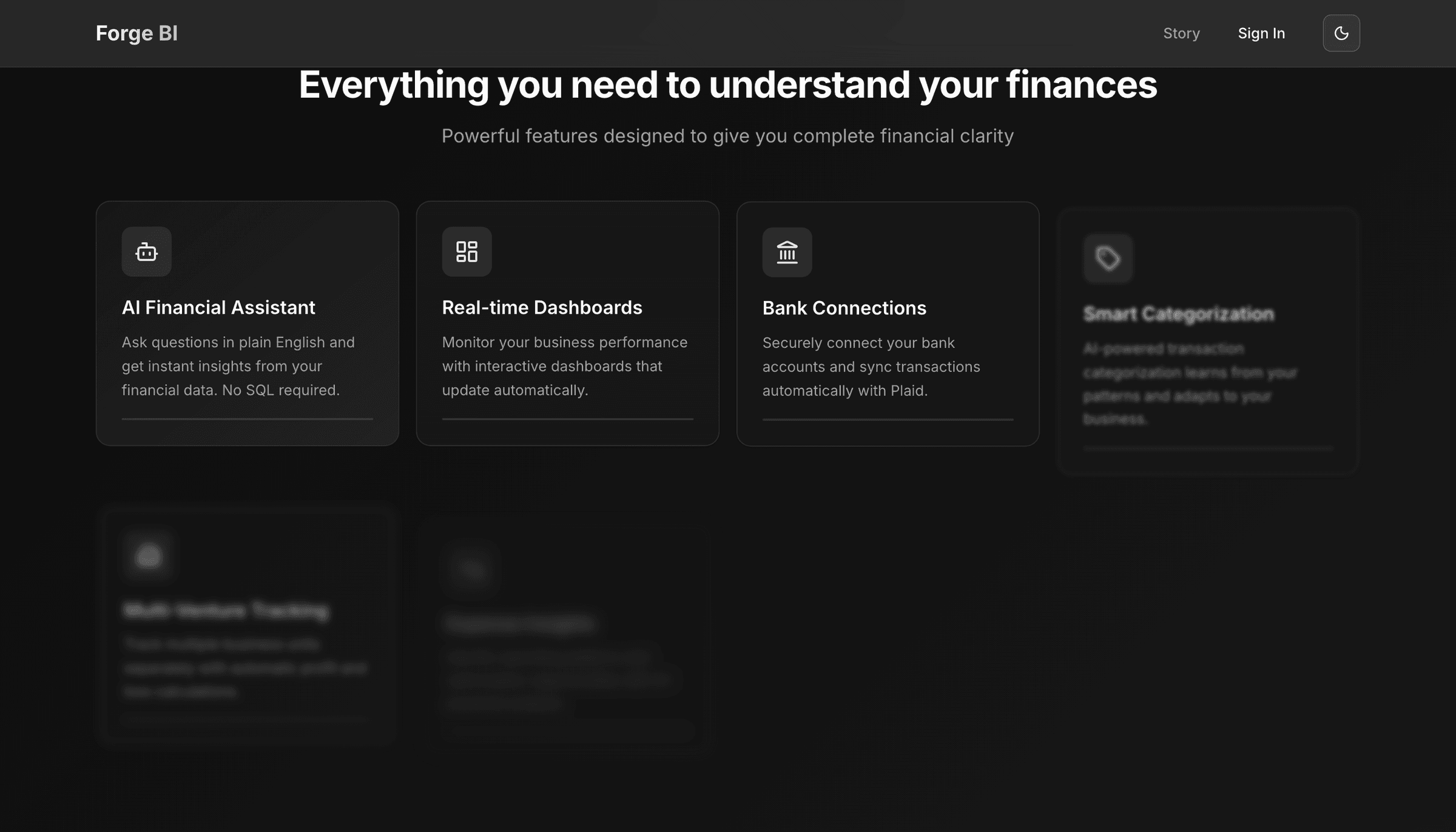
Natural language interface for querying financial data. Ask questions in plain English and get charts, tables, and insights.
Bank Sync
Plaid integration for automatic bank account syncing. Real-time transaction data flows into the platform without manual entry.
Goals
Auto-tracked financial goals: revenue targets, profit margins, break-even analysis. Progress updates automatically from live data.
Lessons & tradeoffs
For eight years I was the financial analyst startups couldn't afford to hire. Building Forge BI, the hard part was never the AI. It was the schema. Name your tables the way an analyst actually thinks and the model starts reasoning in the founder's language instead of generic BI.
Founders ask financial questions in their own words, but a general-purpose finance schema forces the AI to translate twice and it loses the plot.
I named the schema the way analysts actually think (variance, runway, burn) instead of keeping it neutral.
Domain knowledge isn't a feature you bolt on later. It's the architecture. Naming the schema in analyst terms (runway, burn, variance) meant the model could reason directly instead of translating vocabulary first.
An AI finance tool wants to be a chatbot, but a wall of text is the worst possible way to answer 'how's my runway.'
I made chat the input and charts and tables the output. The conversation is how you ask, never how you read the answer.
Treating AI as an analyst replacement instead of a chat partner quietly changed every UI decision downstream.
Plaid's realtime story is rougher than the marketing implies, and a stale balance in a finance tool isn't a bug, it's a trust problem.
I stopped trusting any single signal and ran webhook reconciliation alongside a backfill cron.
For money data, reconcile from two directions and assume the convenient path will lie to you.